


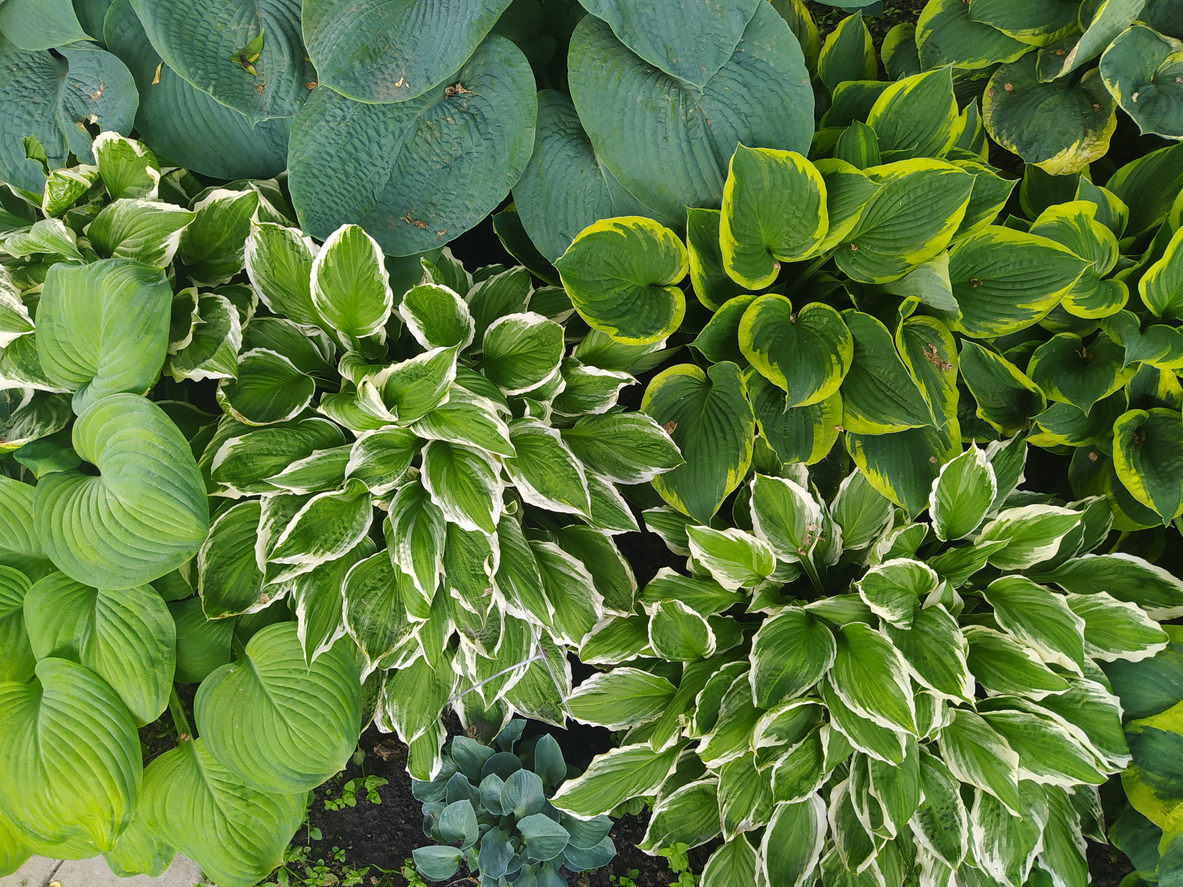
The Short Answer: Hostas are shade plants at heart, and they build their season’s foliage in spring, so a run of 90-degree afternoons in July scorches leaves the plant made months earlier. Keep them in shade during the hottest hours, water deeply once or twice a week rather than a daily sprinkle, and mulch over the root zone by 2 to 3 inches to carry a plant through. Scorched edges will not heal, though the crown underneath can survive and come back at full size next spring. Save any transplanting for late August.
Hostas hold up beautifully in Capital Region yards until about the second week of July. That’s when the temperature climbs into the low 90s, the rain stops for ten days, and the heart-shaped leaves that looked perfect over the Fourth start browning along the edges. Most homeowners assume the plant is finished and go looking for a disease. Heat is the whole story, and our Zone 5b to 6a summers are short enough that a few adjustments in July carry a hosta to fall in decent shape.
What Heat Actually Does to a Hosta
Hostas evolved on the forest floor, under canopy that filtered light and held soil moisture through the summer. The fibrous roots of this shade perennial reflect that, sitting in the top 8 to 12 inches of soil, the layer that dries first. Above 90 degrees, the foliage loses water faster than those shallow roots can replace it.
Leaves losing water faster than roots supply it is what makes a hosta go limp in the afternoon, which is normal. One that stands back up by 8 p.m. is managing; one still wilted at 7 a.m. never refilled overnight.
Heat Scorch and Sun Scald
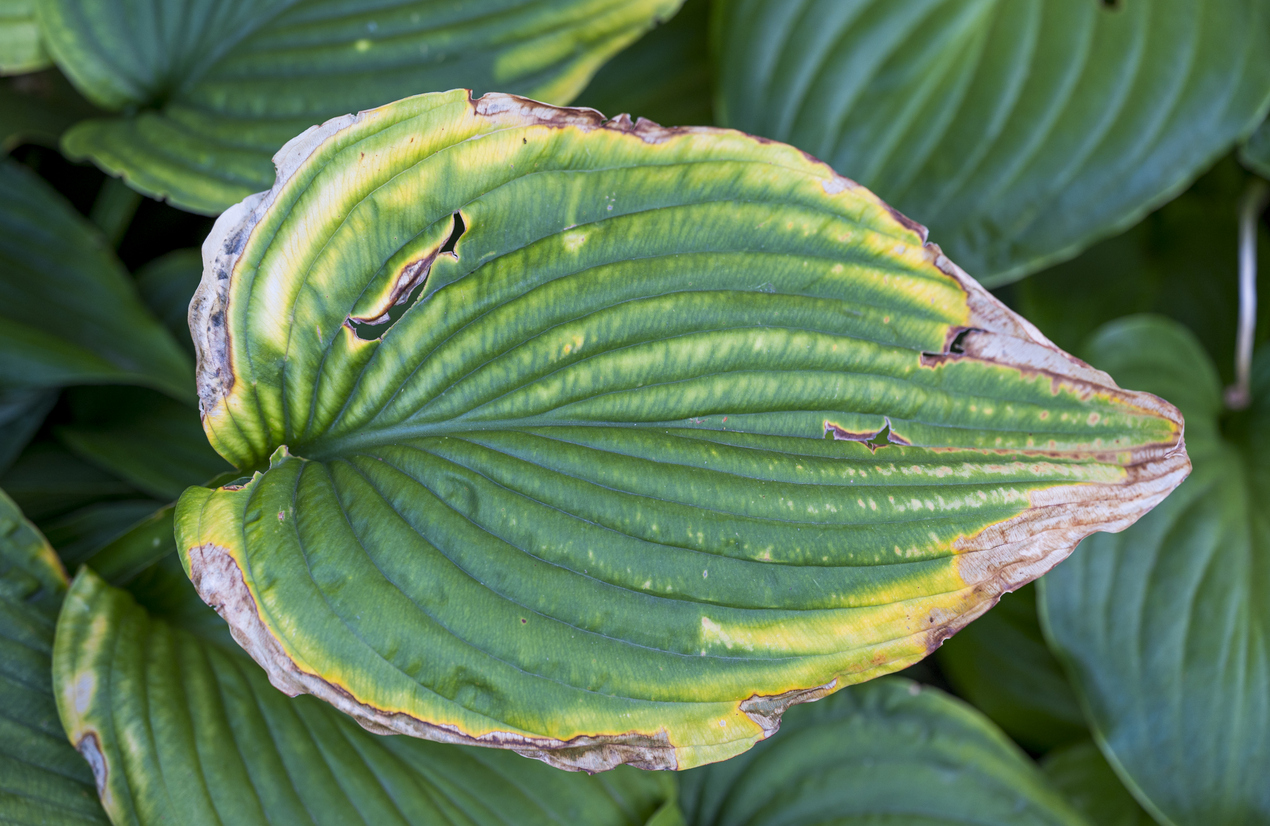
Heat scorch shows up first as a tan or straw-colored band along the leaf margins, dry and papery, working inward between the veins. It carries no yellow halo and does not spread like a fungal spot.
Sun scald appears instead as bleached patches mid-leaf, on flat surfaces catching direct light at midday. Cultivars with white, cream, or gold margins burn first, since that tissue holds less chlorophyll and dries faster than green leaves.
How Much Sun Hostas Can Handle

Leaf color predicts sun tolerance better than any other trait. Blue hostas carry a waxy coating that heat and direct light melt off, leaving a plain green plant by August. Gold and chartreuse-gold leaves need two to four hours of morning sun to color up. Green cultivars do well in part shade.
Hot afternoon sun is the problem in every case. Two hours of light at 8 a.m. is a different exposure than two hours at 3 p.m.
Sun Tolerance by Cultivar
The Sum and Substance and Royal Standard varieties take the most direct sun, holding color through 4 to 6 hours. The chartreuse Guacamole and Fragrant Bouquet cultivars thrive with 3 to 4 hours and prefer it early; Guacamole began as a mutation on a Fragrant Bouquet plant, so the two share the same tall scapes and fragrant white flowers. Blue-leaved Halcyon and gold-margined Frances Williams belong in full shade, where both hold their color. The white-margined Patriot variety scorches anywhere the afternoon reaches it.
Flowers vary less than foliage. Most cultivars open pale lavender flowers in July. The fragrant white ones come from cultivars with Hosta plantaginea in their parentage, like the Royal Standard, which blooms in August.
Watering Through a Heat Wave

Capital Region dry spells typically run for a week or more in July and August, and hostas feel the effects within days. They need about an inch of water a week throughout the growing season, which includes rainfall. Once high temperatures hold above 88 degrees for three straight days, raise that to an inch and a half.
Water them in one or two deep soakings rather than a daily pass with the hose. Shallow watering trains roots to stay near the surface, which is the worst place for them in August.
Checking Soil Moisture
- Push your finger 3 inches into the soil, 6 inches out from the crown.
- Water if it feels dry at that depth. Wait a day if it feels cool and damp.
- Run a soaker hose at the base of the plant for 30 to 45 minutes.
- Dig down 6 inches an hour later. Moisture should have reached that depth.
Timing and Soil Type
Water between 5 and 9 a.m. Morning watering fills the plant before the day’s heat sets in and lets splashed foliage dry within the hour. Evening watering leaves foliage damp overnight, when slugs feed. Midday overhead watering loses most of what you apply.
How often you soak depends on what the water is moving through. Sandy beds want a deep soaking every 3 to 4 days in 90-degree weather, since water drains past the roots before they can use it. Loam, or any bed amended with compost, holds 5 to 7 days and is what you are aiming for. Heavy clay stretches to every 7 to 10 days, though it tends to hold water at the crown after a storm.
Mulch Keeps the Root Zone Cool
Two to three inches of shredded bark, pine fines, or composted leaf mold slows evaporation and holds soil temperature down through the hottest stretch. Pull it back 2 inches from the crown, since mulch piled against it traps moisture and rots the plant.
Mulch does have one side effect. It gives slugs a cool, damp place to wait out the day, and they climb up to feed after dark. Ragged holes between the veins are the sign, and an iron phosphate bait scattered at the base handles them. Thick-leaved cultivars such as Sum and Substance are harder for slugs to chew through.
Siting and Transplanting
Moving a heat-stressed hosta in July often makes things worse, since digging severs roots at the moment the plant needs them the most. Stake the spot you want to move it to now and move it later.
The transplant window opens in late August and runs through September. Soil is still warm enough for root growth, and the plant gets six weeks before the ground freezes. Early spring works too, as the pointed shoots break the surface.
Picking a Better Spot
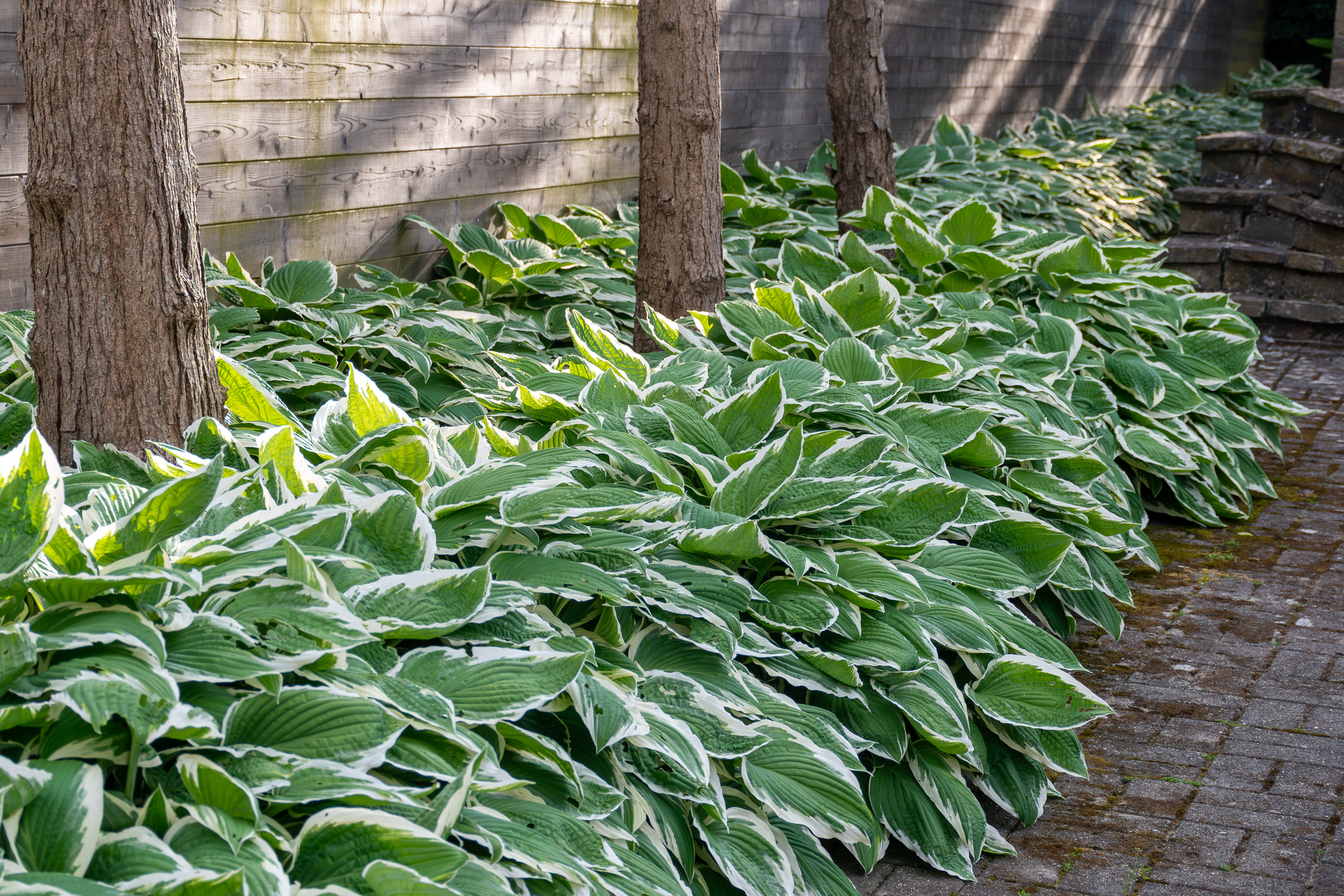
Planting in the right spot gives a hosta morning sun and afternoon shade: an east-facing bed, the north side of the house, or high tree canopy can provide this much-needed covering. Avoid west and southwest exposures, and pavement or siding that reflects heat at the plant.
A plant you would rather not lose can get temporary cover until the transplant window opens. A patio umbrella angled against the west side, or a 30 to 40 percent shade cloth stretched on a frame, drops leaf temperature enough to stop the burn.
What Not to Do During a Heat Wave
Standard midsummer garden tasks all backfire on a plant that is already short on water.
- Do not fertilize. Fertilizer salts pull water from roots that have none to spare. Save the light application of slow-release fertilizer for early spring.
- Do not cut the plant back. Scorched leaves still photosynthesize and feed the crown.
- Do not divide or transplant. Severed roots cannot drink for two to four weeks, which is the worst possible timing in a heat wave.
- Do not water overhead at midday. Most of what you apply evaporates before it reaches the root zone.
What Recovery Looks Like
A hosta does its leaf production in spring, expanding one wave of leaves and a second as the first set hardens off. By the time July heat arrives, it has grown all of the foliage it will carry for the year, and scorched tissue never heals. Brown margins stay brown.
The damage usually stops at the foliage. The crown and roots keep working, and next year’s buds form at the base after flowering regardless of how rough the leaf color looks in August. A plant that dries out completely is the exception, since roots die along with the leaves and it may come back smaller.
The Rest of the Season
Growth often picks up in late August once temperatures moderate and rain returns, and some plants push a small flush of leaves then. Do not count on it to cover July damage. Flowering may also suffer, with heat-stressed plants sending up shorter flower stems or skipping bloom.
Cut the plant to the ground after the first hard frost blackens the foliage, usually early to mid-October here in the Capital Region, which also removes slug eggs. With regular watering and the right exposure, most hostas return at full size.
Getting It Right Next Season
A hosta that scorches every July is usually in the wrong spot. Four hours of hot afternoon sun beats any watering schedule you keep, and moving that plant 15 feet into a shady area under a maple ends the annual burn. Exposure deserves special consideration while a bed is still on paper.
Grasshopper Gardens has planted shade gardens across the Capital Region since 1992, and we know which cultivars hold color in the exposures homeowners actually have. We handle garden design, planting, and maintenance, and our nursery stocks hostas, mulch, and other garden plants for anyone doing the work themselves, with local delivery. Reach out to get advice or a quote from a team member through your beds, or browse the online shop.
